One Multiport Charger or Several Small Ones for Travel?
Compare travel-charging layouts by simultaneous power needs, outlet access, cable choice, plug compatibility, and the cost of relying on one charger.
This guide draws on published documentation and practical use cases, not hands-on testing. It contains no paid product placements or affiliate shopping links. How we work · Affiliate Disclosure
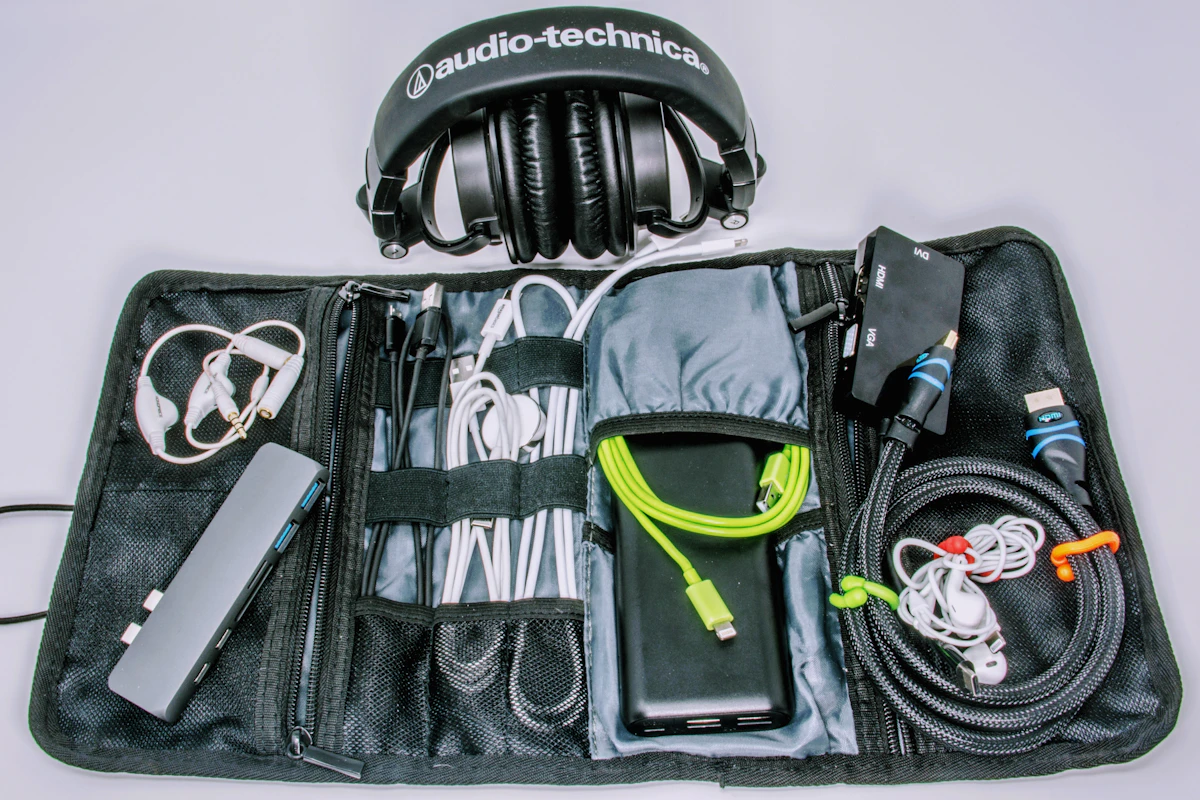
Pack for the devices you must charge at the same time, and distinguish plug fit, input compatibility, and USB output capability.
In this guide
The hotel room has one convenient outlet. A laptop needs power for tomorrow’s presentation, the phone is nearly empty, and a watch needs its own charging cable. A multiport charger can simplify this scene, but only if its shared power arrangement suits the devices plugged into it.
At the other extreme, packing a separate charger for everything can fill a pouch with hardware that spends most of the trip unused. This comparison evaluates kit layouts and published electrical specifications, without claiming charging-speed or thermal tests.
List simultaneous needs, not just devices
Write down which devices must charge together. A laptop used while charging may need a different arrangement from one left charging overnight. A phone and earbuds may fit into a quieter part of the schedule. This simple timetable can prevent overpacking.
A charger’s headline wattage does not tell you what every port delivers when several are occupied. Manufacturers publish allocation tables that may change with the selected combination of ports. Check the arrangement you will actually use, including any difference between USB-C and USB-A outputs.
For example, a charger capable of a high output through one port may divide its capacity when a second device connects. The relevant question is whether the laptop still receives a supported, useful power level in that exact configuration. Our USB-C charger guide explores that distinction in more detail.
| Kit layout | Useful scenario | Main compromise | What to verify |
|---|---|---|---|
| One multiport charger | Several devices sharing limited outlets | One missing charger affects the whole kit | Power allocation with all intended ports used |
| Two compact chargers | Devices needed in different places | Requires additional outlet access | Individual output and plug fit |
| Original laptop charger plus small phone charger | A laptop with specific power needs | More bulk than a consolidated kit | Whether the laptop has special requirements |
| Charger plus power bank | Time away from wall outlets | Extra weight and another item to recharge | Compatible input, output, and travel conditions |
Plug shape and voltage are different checks
A plug adapter changes the physical connection to an outlet. Do not assume that it also converts voltage. Read the charger’s input label and the adapter’s instructions, then verify compatibility with the destination’s supply and socket arrangement.
Many portable electronics chargers support a broad input range, but that is a property to confirm on the actual unit. Apple, for example, publishes input specifications separately from its regional plug-adapter instructions. Treat that separation as a useful model for checking any travel kit.
Avoid extending the conclusion from a phone charger to unrelated appliances. A charging pouch and a travel appliance may have different requirements even if their plugs look alike. When the label or instructions do not clearly establish compatibility, resolve that uncertainty before packing the item.
Cables should have distinct jobs
Bring a cable suitable for each required connection and power level. A shared connector shape does not establish a cable’s charging or data capability. Our USB-C cable comparison explains how to read those specifications separately.
Length matters in a hotel room. A very short cable can be tidy at a desk but inconvenient when the outlet sits behind furniture. A long cable may help, provided it does not stretch across a walkway or hang the device from its connector.
Try packing and using the entire kit at home. Plug in the devices in the intended combination, confirm that they charge, and check whether connecting another device changes the arrangement. Include watch chargers and any proprietary connectors; those are easy to overlook when most of the kit uses USB-C.
Consider the single point of failure
One charger is simple to pack and equally simple to leave behind. For a work trip where charging is essential, a small independent backup may be more valuable than extra headline wattage on the main unit. That backup might be another compatible charger already owned, rather than a newly assembled collection.
A power bank serves a different purpose from a wall charger. It can help when no outlet is available, but it must itself be charged and meet the applicable travel conditions. Check the current airline and route rules before departure; our power-bank guide covers the specifications to identify.
Who should skip the oversized kit?
If the trip involves only a phone and one small accessory, a large multiport unit may add weight without useful flexibility. Keep a reliable existing charger when its capabilities match the trip. Do not replace every cable merely to make the pouch look coordinated.
Conversely, skip consolidation if your laptop or another device has a charging requirement that the proposed kit cannot clearly support. Convenience is not a substitute for verified compatibility.
Frequently asked questions
Will every device receive the charger’s maximum wattage?
No. Device support, charging protocols, cable capability, and the active port combination all matter. Read the allocation table.
Is one international adapter enough?
Only if it supports the actual sockets and equipment on the itinerary. Check each destination and the adapter’s stated limitations.
Should I pack the shortest cables possible?
Choose lengths for realistic outlet locations. Compactness is useful, but the phone still needs a sensible place to rest while charging.
Sources
Apple’s power-adapter specifications, regional adapter guidance, and Anker’s multiport allocation explanation support the compatibility checks. Sources checked October 21, 2026.
Keep exploring

Active vs Passive Styluses: Choose for Notes, Drawing or Simple Taps
Understand screen compatibility, palm rejection, pressure support and replacement tips before choosing a stylus for your tablet.
Read the guide
Slim, Rugged, or Wallet Phone Case: Comparing Daily Tradeoffs
Compare phone-case layouts by grip, pocket fit, control access, magnetic accessories, charging compatibility, and realistic protection expectations.
Read the guide
Phone Grips and Stands: Match Your Pocket, Desk and Charger
Compare adhesive grips, removable magnetic supports and separate stands for holding, viewing and charging a phone throughout the day.
Read the guide